Primary keyword: FOSSiBOT F800 portable power station
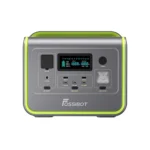
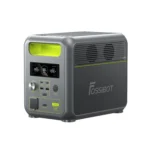
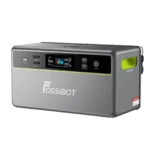
The F800 is the compact AC power station in this group, with a 512Wh LiFePO4 battery and an 800W pure-sine inverter. Its strength is not heavy-duty backup; it is the ability to handle a useful range of electronics and selected appliances while remaining at 6.5kg.
Standard Packing List
Accessory note: This model is supplied with accessories, but a complete model-specific standard packing list could not be verified on the official manufacturer page reviewed for this update. To avoid misleading readers, individual accessory names and quantities are not guessed. Confirm the exact included accessories for the regional model and selected bundle with FOSSiBOT or the seller before ordering. Optional solar panels, expansion batteries, cables, or bundle-only items should not be assumed included unless explicitly listed.
Official specifications
| Specification | Official figure |
|---|---|
| Capacity | 512Wh |
| Battery | LiFePO4 |
| Battery pack voltage | 25.6V |
| AC output | 800W pure sine wave |
| AC frequency | 50/60Hz |
| AC input | 400W max. |
| Solar / MPPT input | 200W max., 11.5–50V, 8A |
| USB-A | 2 × QC3.0 18W |
| USB-C | 1 × PD100W + 2 × PD20W |
| 12V outputs | 12V/10A |
| UPS | About 10ms |
| Operating temperature | -10 to 40°C |
| Charging temperature | 0 to 40°C |
| Lifecycle | 3,500+ cycles |
| AC input power adjustment | Not supported |
| Weight | 6.5kg |
| Dimensions | 276 × 209 × 230mm |
Appliance reference table
These wattages are reference values from a FOSSiBOT comparison chart that could not be re-checked on the current EU product page, so treat them as indicative.
| Appliance | Reference Running Power | Reference Surge |
|---|---|---|
| 20-inch box fan | 200W | 350W |
| Blender | 300W | 800W |
| TV | 500W | — |
| Microwave | 600–1,000W | — |
| Refrigerator / freezer | 700W | 2,200W |
The table is particularly important for the F800 because its 800W continuous AC limit is much lower than some of the appliance examples’ possible startup or rated demands. Compatibility must therefore be checked against the exact appliance, not inferred from the presence of the appliance in a comparison table.
What the 512Wh capacity means
Capacity is the energy reserve. The F800 can be excellent for lower-power loads because a laptop, light, router or small electronics setup consumes far less energy than a microwave or heater. The inverter limit and battery capacity must always be considered together.
Best use cases
The F800 is well suited to camping electronics, networking equipment, lighting, small fans, cameras and short-duration AC use. Its 100W USB-C port is also useful for modern laptops and other USB-C devices that support the required charging profile.
Solar and charging
With up to 200W solar input and up to 400W AC input, the F800 can be recharged through more than one route. Solar performance is weather-dependent, so the 200W figure should be treated as an input ceiling rather than an expected continuous output.
UPS use
The approximately 10ms UPS switching capability can help keep selected electronics powered through a mains interruption. For a small home office or networking setup, this can be more useful than the ability to run a large appliance.
Safety and limitations
Do not exceed 800W continuous AC output. Motors and compressors can require substantially higher startup power. Keep the station within its operating temperature range and do not block ventilation openings.
Verdict
The F800 is strongest when its compact size is more important than long-duration energy storage. Its appliance reference table shows both its usefulness and its limits, making it easier to choose responsibly.